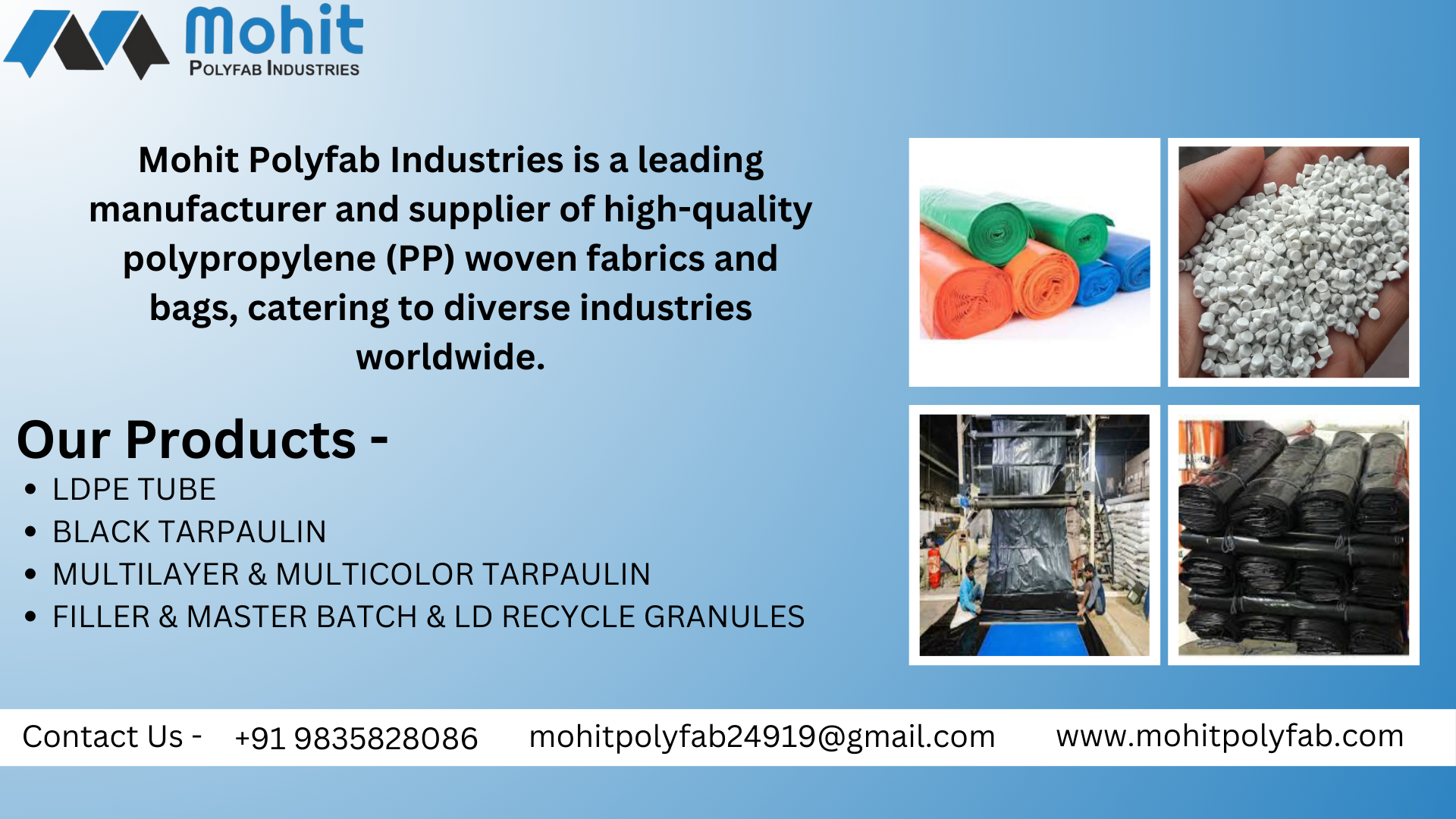
Introduction to Eco-Friendly Multilayer Poly Tarpaulin
Eco-Friendly Multilayer Poly Tarpaulin represents a significant advancement in sustainable protective coverings. At Mohit Polyfab Industries, we are dedicated to manufacturing high-performance poly tarpaulins that are not only durable, waterproof, and UV-resistant but also 100% recyclable. Our multilayer technology provides superior strength and longevity, offering a green solution for agriculture, construction, and packaging without compromising on quality. Choose sustainability for your projects with our advanced poly tarpaulin.
Working Principle and Manufacturing Process
Our eco-friendly tarpaulins are produced using a state-of-the-art multilayer co-extrusion process. This method bonds multiple layers of high-quality, recyclable polyethylene (poly) resin into a single, cohesive sheet. This structure enhances tear resistance, puncture strength, and durability. We use non-toxic pigments and ensure our manufacturing process minimizes waste. By focusing on a mono-material design, we make the entire tarpaulin 100% recyclable, supporting a circular economy. Learn about our green manufacturing at the official website.
Types of Eco-Friendly Poly Tarpaulin
- 100% Recyclable LDPE Tarpaulin – Flexible and ideal for sustainable agriculture.
- HDPE Woven Eco-Friendly Tarps – High-strength, recyclable covers for industrial use.
- Green Construction Tarps – Durable sheets for covering materials on eco-conscious sites.
- Sustainable Pond Liners – Non-toxic and recyclable liners for water conservation.
- Multilayer Agri-Tarps – UV-stabilized, eco-friendly covers for greenhouses and crops.
Key Features and Specifications
- 100% Recyclable – Made from polyethylene, supporting green initiatives.
- Superior Multilayer Strength – Offers high resistance to tears, punctures, and stress.
- UV Stabilized – Protected against solar degradation for a longer outdoor life.
- Completely Waterproof – Heat-sealed seams provide total protection from moisture.
- Non-Toxic Materials – Safe for use in agriculture, aquaculture, and water storage.
Applications of Eco-Friendly Multilayer Poly Tarpaulin
- In sustainable agriculture, these tarpaulins are used for organic farming, as non-toxic pond liners for aquaculture, and as durable, recyclable greenhouse covers.
- Eco-conscious construction projects use them to cover building materials, protect work areas, and as ground-level barriers, contributing to green building certifications.
- For logistics and warehousing, they serve as reusable and recyclable pallet covers and protective wrapping for goods, reducing plastic waste in the supply chain.
- They are also used in rainwater harvesting systems, as temporary eco-friendly shelters, and for any application where durable protection and environmental responsibility are priorities.
Benefits of Using Eco-Friendly Poly Tarpaulin
- Reduces environmental footprint by being 100% recyclable, diverting tons of plastic from landfills and promoting a circular economy.
- The multilayer design provides exceptional durability and a longer service life, leading to less frequent replacement and reduced long-term costs.
- Guarantees complete protection from rain, sun, and dust, safeguarding valuable assets, crops, or materials without leaking or degrading quickly.
- Using non-toxic, eco-friendly materials ensures safety for sensitive applications like organic farming, fish ponds, and drinking water storage.
Top Manufacturers and Suppliers in India
Mohit Polyfab Industries is a leading manufacturer of innovative eco-friendly multilayer poly tarpaulin in India. Established in 2019, our mission is to fuse high-performance protection with environmental stewardship. We utilize modern, low-waste manufacturing techniques to produce sustainable tarpaulins that meet the highest standards of quality. Our commitment to green solutions makes us the ideal partner for businesses looking to enhance their sustainability credentials.
Maintenance and Safety Tips
- Clean the tarpaulin regularly with water to remove soil or debris, especially before recycling.
- Avoid using harsh chemical cleaners that could damage the poly material.
- Store the dry tarpaulin folded or rolled in a shaded place to maximize its lifespan.
- Properly dispose of the tarpaulin at a designated plastic recycling facility (LDPE/HDPE).
- Ensure the tarpaulin is securely fastened to prevent flapping, which can cause wear.
FAQs – Eco-Friendly Multilayer Poly Tarpaulin
Contact Details
Talk to our specialists today for tailored solutions and fast assistance.